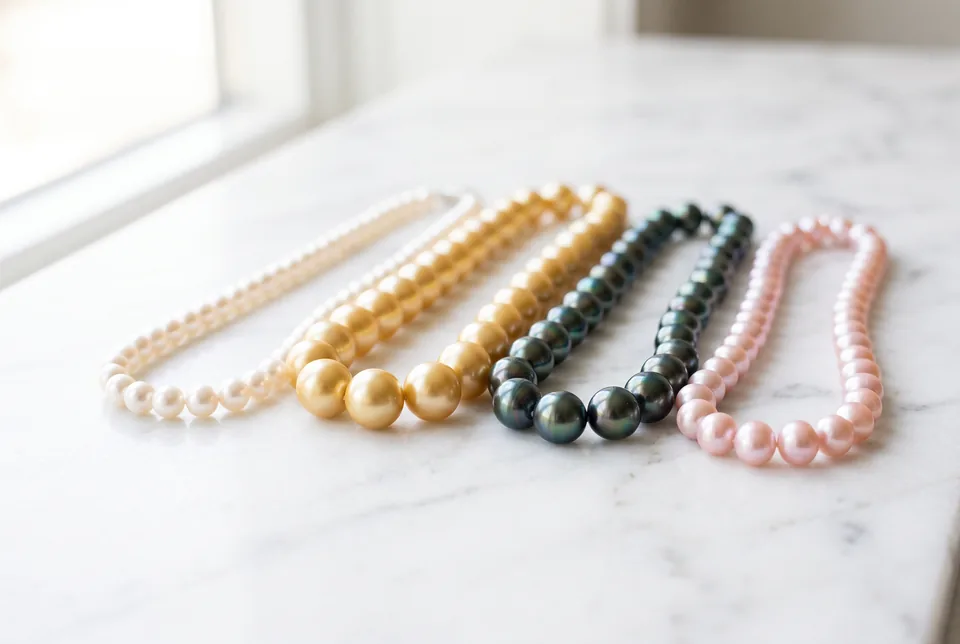
Anyone buying a pearl necklace today is almost certainly buying cultured pearls. According to trade figures, natural pearls now account for only around 0.2 per cent of the world's supply. The distinction is still far from a footnote, because it determines price, provenance and how the pearl may be described.
How CIBJO defines natural and cultured pearls
CIBJO, the world confederation of the jewellery and gemstone trade, sets out what the two terms mean in its 2021 classification guide. A natural pearl, by that definition, forms without human intervention inside a mollusc, in a pearl sac the animal has created by itself. It consists of conchiolin, a protein, and of calcium carbonate in the form of aragonite or calcite, laid down in concentric layers. A cultured pearl also grows inside a living mollusc, but in a pearl sac that was created through human intervention.
That pearl sac is the heart of the matter. In pearl farming, a piece of mantle tissue from a donor mollusc is implanted into the animal, usually together with a bead of shell, the nucleus. The tissue forms the pearl sac and the nucleus dictates the shape. CIBJO therefore distinguishes between beaded and non-beaded cultured pearls. Freshwater pearls from China are mostly grown without a bead, while Akoya, South Sea and Tahitian pearls almost always contain one. How the procedure works step by step is explained in the article How cultured pearls are made.
What the definition does not say is just as important: a cultured pearl is not an imitation. It grows inside the animal, it consists of genuine nacre, and in trade terms it is a real pearl. Under CIBJO rules, imitations are only those products that mimic the appearance of a pearl and are manufactured in a factory.
How thick the nacre of a cultured pearl is
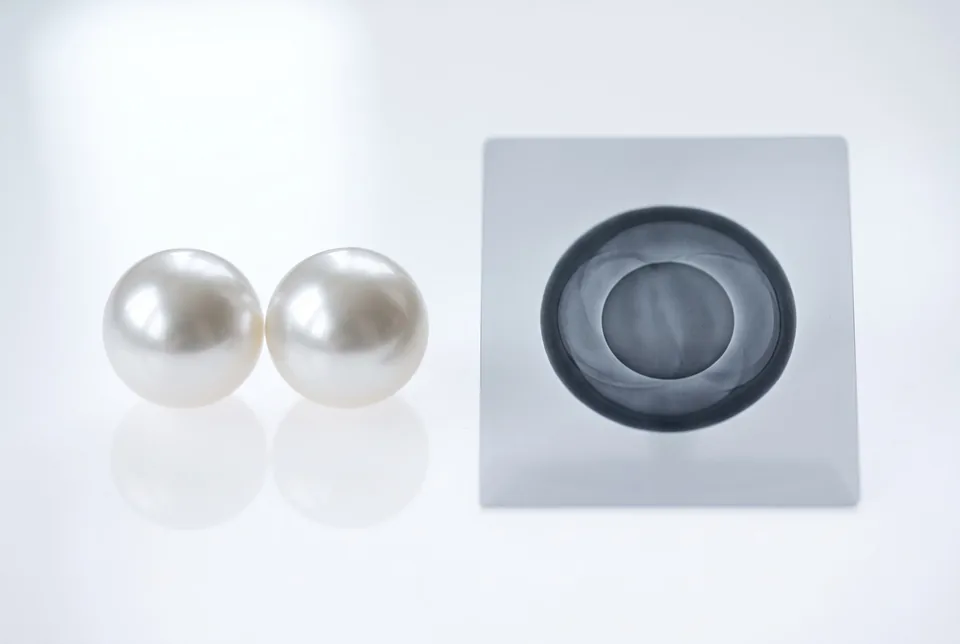
In a beaded cultured pearl, most of the pearl is the implanted bead. The nacre sits over it as a coating. In an X-ray image published by the Gemological Institute of America (GIA), the nacre of an Akoya pearl measures around 0.34 millimetres and that of a South Sea pearl around 1.92 millimetres. These are two sample pearls rather than averages, but the order of magnitude is typical. An Akoya pearl of 7 millimetres in diameter is therefore almost entirely nucleus. A natural pearl has no such core. It is built of nacre from the inside out, grown in rings over a period of years.
The culturing time explains the thickness of the layer. CIBJO gives a culturing period of 2 to 3 years for Australian and Philippine South Sea pearls, with each mollusc yielding only one beaded pearl per operation. According to the guide, Akoya pearls typically reach 5 to 8 millimetres, South Sea pearls 11 to 16 millimetres, and rare specimens exceed 20 millimetres. The Akoya oyster has been used for pearl farming for around 120 years.
Proof in the X-ray image
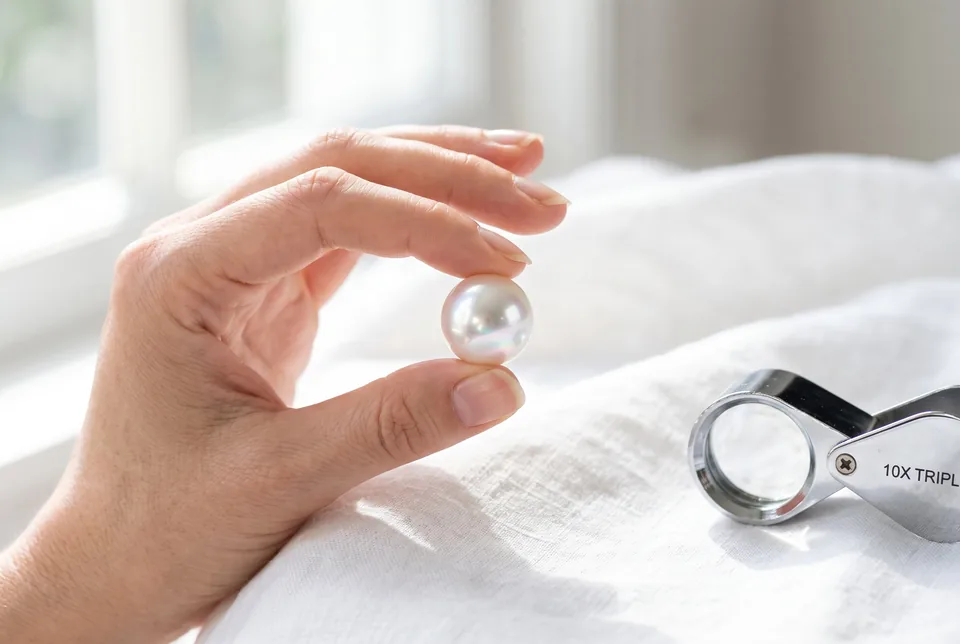
From the outside, a natural pearl and a cultured pearl cannot be told apart. Lustre, colour and surface reveal nothing about the interior. This is why laboratories have worked with X-ray radiography since the 1950s, a form of transillumination that shows the inside of the pearl as a shadow image. GIA describes it as the most reliable non-destructive method, and every pearl submitted goes through this test.
The three pearl types produce three different pictures. A natural pearl shows concentric growth rings, often compared with the rings of an onion or a tree, and no solid core. A beaded cultured pearl shows a clear, continuous boundary line between the shell nucleus and the nacre layers above it. A non-beaded cultured pearl is the hardest to identify: it shows irregular linear structures, small twisted cavities or a white zone at the centre left behind by the implanted tissue.
It is precisely these non-beaded cultured pearls that have pushed laboratories to upgrade their equipment. X-ray microtomography, a technique that computes a three-dimensional model from many individual images, achieves a resolution of 1 to 10 micrometres according to GIA. A pearl of 7 millimetres is captured in about 20 minutes. The Swiss institute SSEF adds spectroscopy and DNA analysis where required, and since 2017 has offered age determination by radiocarbon dating.
Natural and cultured pearls compared
| Feature | Natural pearl | Cultured pearl |
|---|---|---|
| Formation | Without human intervention in a wild mollusc (CIBJO) | Pearl sac created by implanted mantle tissue, on a farm |
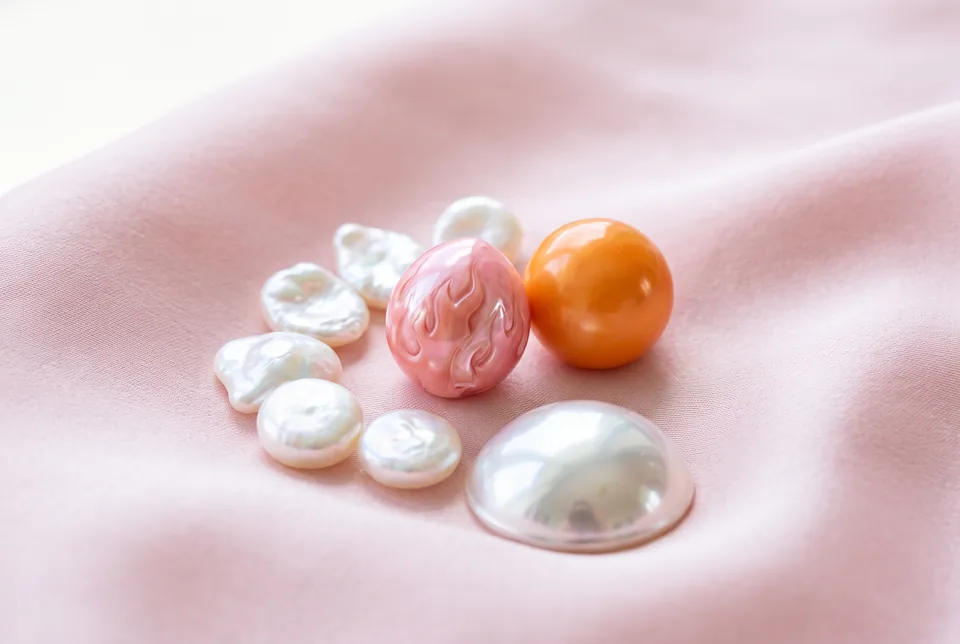
| Nucleus | None, nacre right through to the centre | Bead of shell (Akoya, South Sea, Tahitian) or non-beaded (freshwater, keshi) |
| Testing | X-ray: concentric rings without a core | X-ray: boundary line around the nucleus or cavities left by the tissue |
| Market share | Around 0.2 per cent of supply | Around 99.8 per cent of supply |
| Nacre thickness | Continuous, grown over years | GIA example: Akoya 0.34 mm, South Sea 1.92 mm |
| Price factor | Auction 2024: 32 natural pearls (plus 11 cultured) up to 12.2 mm for USD 378,000 | Comparable sizes from specialist retailers for a fraction of that |
Why almost every pearl on the market is a cultured pearl
According to an industry report by Rapaport, only 0.2 per cent of the pearls offered worldwide come from wild molluscs, the remaining 99.8 per cent from farms. The waters of Bahrain, historically the most important fishing ground, now yield only around 7 kilograms of natural pearls a year, according to the same report. Dealers cite as a rule of thumb that fewer than one in 10,000 wild oysters contains a pearl at all, and only a fraction of those are fit for jewellery. There are no reliable counts to back this up, but the order of magnitude explains why natural pearl fishing was never a business that could be planned.
That is why Bahrain chose an unusual path in 1928. A public proclamation banned the sale, offering and possession of cultured pearls for the purpose of trade. The rule still stands today, and according to the DANAT laboratory Bahrain is the only country in the world that prohibits trade in cultured pearls by law. The story behind that decision is told in the article on pearl diving in the Persian Gulf.
The testing laboratory DANAT, the Bahrain Institute for Pearls and Gemstones, grows out of the same tradition. It was founded in 2017 as the successor to a state laboratory dating from 1990, and it examined more than 2 million pearls in its first year alone. By 2026 the institute reports a total of over 32 million pearls and gemstones, an average of roughly 3.5 million tests a year. Who has pearls tested at all is telling. Henry Hänni, then director of SSEF, said in 2007 that 90 per cent of the pearls landing on his desk were natural pearls. The reason is simple: with a cultured pearl a report is rarely worth the cost, with a natural pearl a great deal of money is at stake.
What the difference costs
Auction results show the size of the price gap better than any price list. At Christie's in New York in June 2024, a graduated necklace of pearls from 7.25 to 12.20 millimetres came under the hammer. It contained 32 natural pearls and 11 cultured pearls, the cultured pearls sitting at the back near the clasp. The estimate was USD 50,000 to 70,000; the hammer price was USD 378,000, backed by an SSEF report from 2023. A second necklace in the same sale, 61 natural pearls from 5.23 to 9.80 millimetres with a Tiffany clasp, fetched USD 201,600 against an estimate of USD 30,000 to 50,000. A pair of earrings with two natural pearls of around 15 millimetres made USD 277,200, estimated at USD 20,000 to 30,000.
A cultured pearl necklace with pearls of comparable size costs a fraction of that from a specialist retailer, depending on type, quality and nacre thickness. The premium for a natural pearl is therefore not a premium for beauty, since a fine South Sea pearl shines no less brightly. It is a premium for rarity, for age and for the history that a laboratory report confirms.
What the report has to deliver
Because the difference lies only on the inside, the laboratory certificate is part of a natural pearl's value. A reputable report states the number of pearls, their measurements, whether they are of saltwater or freshwater origin, whether any treatments are present, and the result of the X-ray analysis. For mixed strands, like the examples from New York, it lists the cultured pearls individually. Anyone who has inherited a pearl necklace and does not know what is in it will find the route to a laboratory in the article Inherited pearls: how to have them appraised.
Frequently asked questions
Can you tell natural and cultured pearls apart with the naked eye?
No. Lustre, colour and surface are the same in both; the difference lies inside. Only an X-ray image shows whether there is a shell nucleus or a cavity structure left by implanted tissue. Laboratories such as GIA, SSEF and DANAT have used this method since the 1950s.
Are cultured pearls real pearls?
Yes. Under the definition of the world confederation CIBJO, a cultured pearl grows inside a living mollusc and consists of genuine nacre. Only factory-made products that mimic the appearance of a pearl count as imitations. Cultured pearls must, however, be described as cultured pearls when sold.
What percentage of pearls on the market are natural pearls?
According to an industry report by Rapaport, around 0.2 per cent; the remaining 99.8 per cent are cultured pearls. The waters of Bahrain now yield only around 7 kilograms of natural pearls a year. Anyone buying a pearl necklace without a laboratory report is almost certainly holding cultured pearls.
How much more expensive is a natural pearl than a cultured pearl?
There is no fixed multiplier, but auctions show the order of magnitude. A necklace of 32 natural pearls and 11 cultured pearls up to 12.2 millimetres sold at Christie's in 2024 for USD 378,000, more than five times the upper estimate. Cultured pearl necklaces of comparable size cost a fraction of that from specialist retailers.
Why does Bahrain ban cultured pearls?
Bahrain was the most important fishing ground for natural pearls and wanted to protect its craft from cheap cultured pearls from Japan. Since 1928 the sale, offering and possession of cultured pearls for trade have been banned, and the rule still applies today. The state laboratory DANAT has tested authenticity since 2017 and has examined more than 32 million pearls and gemstones.
What does the X-ray show in a non-beaded cultured pearl?
Non-beaded cultured pearls, such as freshwater pearls or keshi, have no boundary line around a nucleus. According to GIA, they show irregular linear structures, small twisted cavities or a white zone at the centre. For reliable results, laboratories use microtomography with a resolution of 1 to 10 micrometres; scanning a 7-millimetre pearl takes about 20 minutes.
Sources
- CIBJO Guide for Classifying Natural Pearls and Cultured Pearls (Pearl Commission 2021-1) CIBJO
- Applications of X-Ray Radiography and X-Ray Computed Microtomography in Gemology GIA, Gems & Gemology
- How does GIA identify whether pearls are Natural or Cultured? GIA
- Bahrain's Pearls: Preserving a Heritage Rapaport
- How Bahrain is preserving its centuries-old natural pearl industry South China Morning Post
- Bahrain Institute for Pearls & Gemstones (DANAT) Reaches One Year Milestone DANAT
- About Us DANAT
- New milestone as Danat tests 32m pearls and gemstones Gulf Daily News
- Natural Pearls Riding High on the Wave at Christie's NY Magnificent Jewels Roskin Gem News Report
- Perlen: Tränen der Götter Bilanz
- Pearl Testing SSEF Swiss Gemmological Institute
- Natural Pearls: Rarity, Value & Formation The Pearl Source