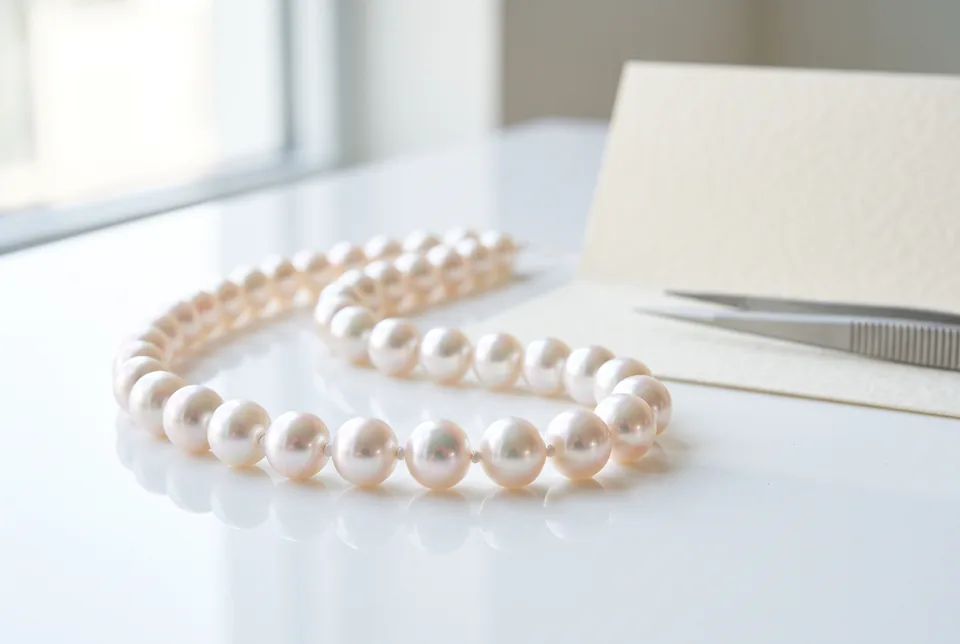
Lustre describes how sharply and brightly light reflects off the surface of a pearl. A pearl with high lustre shows window frames and lamps as crisp outlines, while one with weak lustre looks milky or chalky. The GIA distinguishes five grades: Excellent, Very Good, Good, Fair and Poor.
Physically, the effect arises in the nacre. It consists of aragonite platelets around 0.3 to 0.5 micrometres thick, separated by wafer-thin layers of conchiolin, an organic protein. This thickness lies within the wavelength range of visible light, which is why the platelets both reflect and refract it. The more even the layers, the sharper the reflection.
When buying, many experts regard lustre as the most important of the seven GIA value factors, ahead of size and colour. Akoya pearls often show the sharpest, almost metallic lustre, while South Sea pearls have a softer, satin-like glow. How the grades affect the price is explained in the guide to pearl grades from AAA to Hanadama.
Lustre slider
Lustre is the sharpness of the reflection. The slider shows what graders distinguish between poor and excellent.