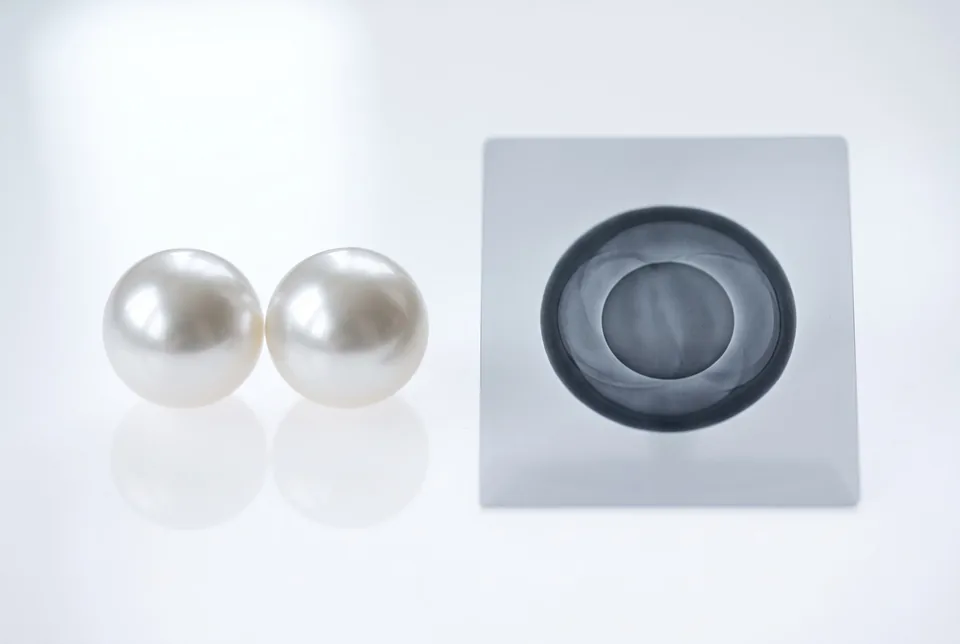
Natural pearls form without human intervention. A foreign body or an injury to the mantle causes a pearl sac to form in the soft body of the mollusc, which deposits nacre layer by layer. The world federation CIBJO stipulates in its Pearl Blue Book that the word pearl without qualification may only describe an untreated natural pearl.
From the outside, the difference from a cultured pearl cannot be seen. Proof is only possible in a laboratory by X-ray: natural pearls show concentric growth rings right to the centre, cultured pearls a bead or the cavity left by a piece of tissue. Natural pearls today account for less than 1 percent of the pearl market. Historic fishing grounds were the Persian Gulf, Sri Lanka and the Caribbean.
Prices are correspondingly high. The record stands at around 36.2 million US dollars for Marie Antoinette's pearl pendant, auctioned in Geneva in 2018. How the two types differ is explained in the article Natural or cultured pearl.