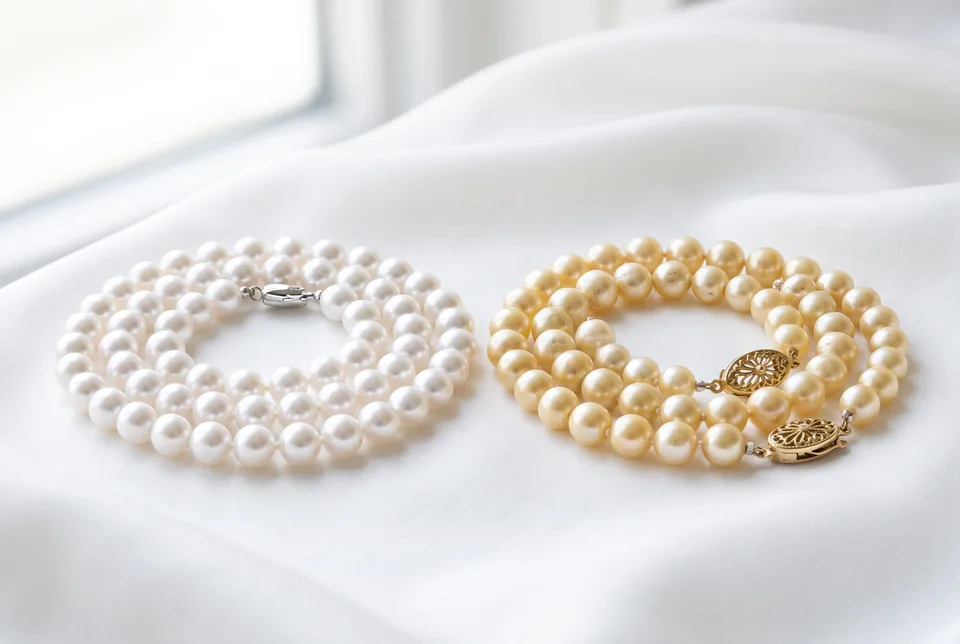
Nacre is the substance a pearl is made of. The mollusc deposits it in thousands of layers around the nucleus, the implanted bead, or around a piece of tissue. Each layer consists of aragonite, a crystalline form of calcium carbonate, bound together by conchiolin, an organic protein. The individual aragonite platelets are only 0.3 to 0.5 micrometres thick.
The thickness of the entire nacre layer varies greatly by pearl type. Commercial Akoya pearls carry 0.3 to 0.5 mm of nacre, with good qualities reaching 0.8 mm. South Sea pearls grow for 2 to 4 years and reach 2 mm and more. The Hanadama certificate requires at least 0.4 mm per side, measured by X-ray. Freshwater pearls usually consist entirely of nacre because they are cultured without a bead.
Thin nacre reveals itself by a blinking effect when the pearl is rolled: the nucleus shows through. Such pearls wear more quickly and lose their lustre sooner. Read more in the article on pearl lifespan and yellowing.