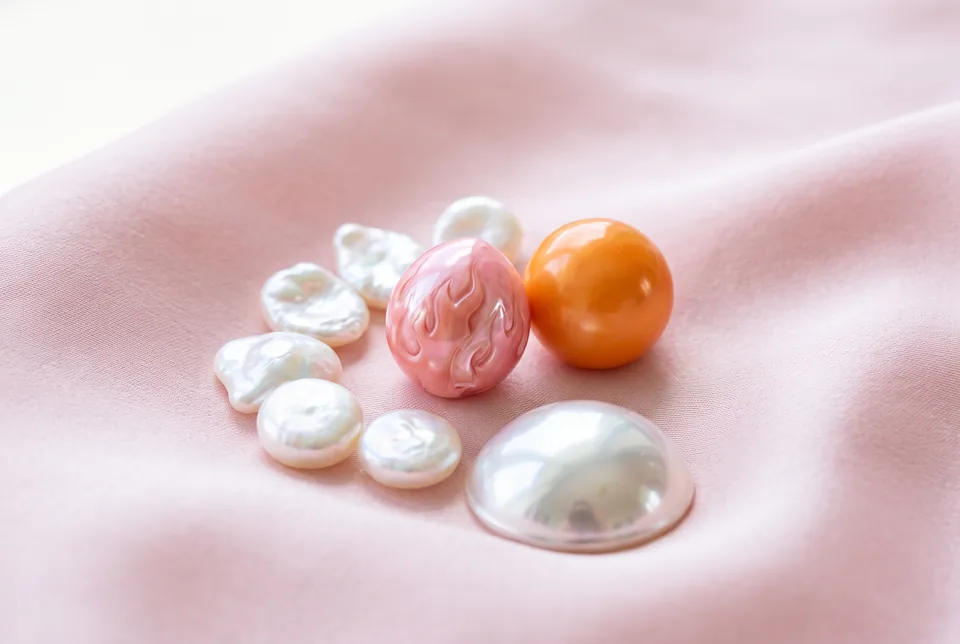
Keshi means poppy seed in Japanese. The name was first given to the tiny by-product pearls that formed in Akoya oysters alongside the actual cultured pearl. Today the term covers any beadless pearl from saltwater culturing: the oyster rejects the implanted nucleus, but the mantle tissue remains and still forms a pearl sac. What grows is nacre without a bead.
This is the source of their often exceptional lustre. Keshi pearls are 100 percent nacre and irregular in shape, flat, elongated or folded. Akoya keshi usually measure 1 to 5 mm, keshi from South Sea and Tahitian oysters 3 to 13 mm. The world federation CIBJO classifies keshi as cultured pearls, not natural pearls, since they would not have formed without the farmer's intervention.
Because farms now check the nucleus by X-ray and re-implant it, keshi are becoming rarer. More on keshi, mabe and conch in the article Pearls beyond the norm.