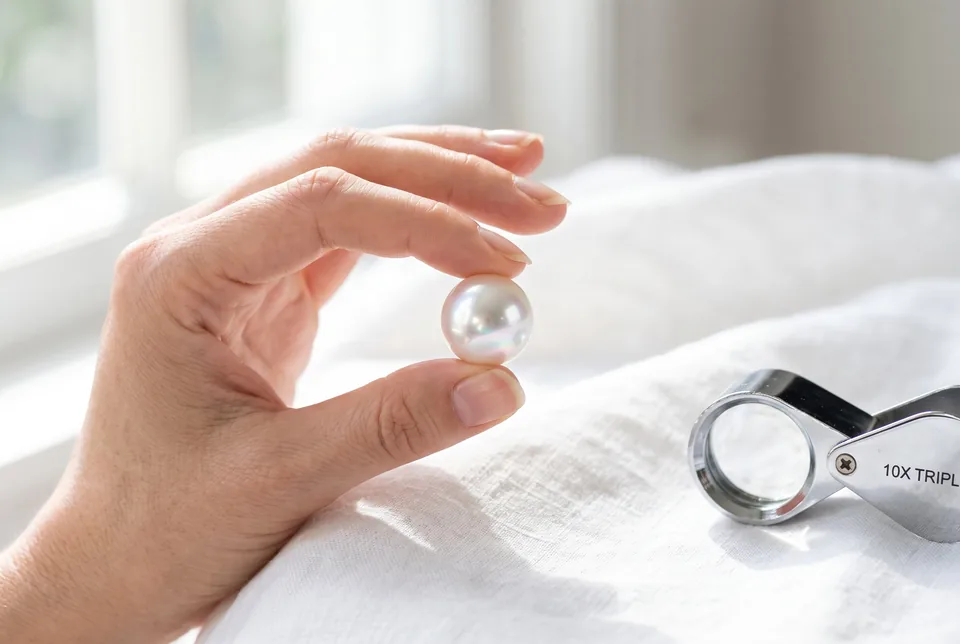
Freshwater pearls come from mussels that live in lakes and rivers, above all the triangle mussel Hyriopsis cumingii. Almost the entire world production comes from China. Unlike Akoya or South Sea, no bead is usually implanted, only a piece of mantle tissue around 1 mm in size. The pearl therefore consists almost entirely of nacre.
A single mussel can accept up to 25 pieces of tissue per shell half, so up to 50 pearls per cycle. This volume explains the price: freshwater pearls are the least expensive type, yet in good quality they are very durable because there is no bead to show through. Shapes range from potato and oval to round pieces, and bead-nucleated varieties reach considerably larger diameters.
White, rose, peach and lavender are natural colours. How to distinguish genuine freshwater pearls from imitations is explained in the article How to tell real pearls.