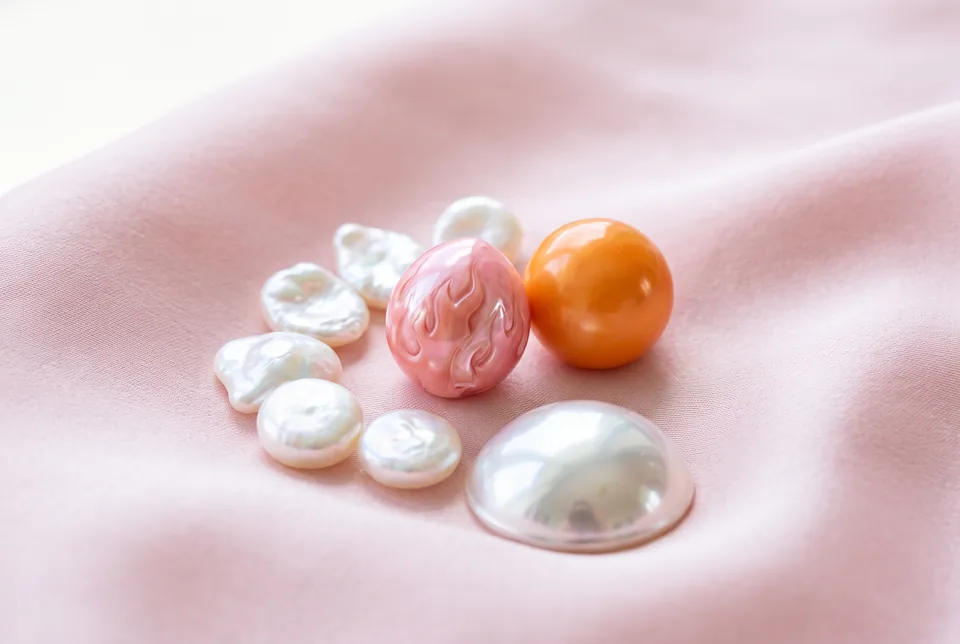
The conch pearl does not come from a bivalve but from the queen conch, Lobatus gigas, a sea snail that lives in the Caribbean, off the Bahamas and the Florida Keys. It has no nacre. Its calcium carbonate is deposited in fine, bundled fibres, which under light produces a flame-like pattern known as the flame structure. The sheen is porcelain-like, and the colour ranges from pale pink to salmon.
Conch pearls are purely natural pearls. Only around 1 in 10,000 conchs carries a pearl at all, and of these only around 1 in 100 reaches jewellery quality. Most finds are a by-product of fishing for the meat. Attempts at culturing exist, but no cultured conch pearl has yet reached the market.
Good pieces are small, often under 5 carats, and are traded per carat. The colour can fade in sunlight, which is why conch pearls belong in rings and brooches rather than in necklaces for a day at the beach. On the family of non-nacreous pearls: Keshi, mabe, conch and melo.